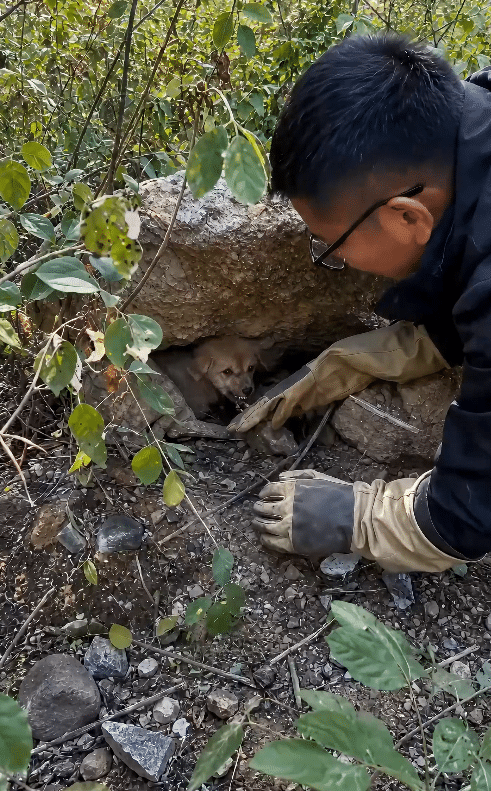
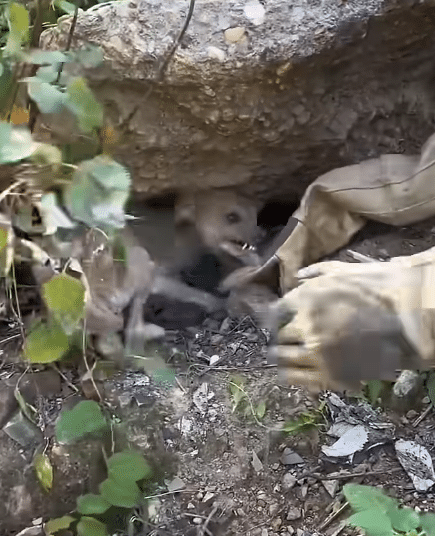
The barking seemed endless. Beneath a massive rock formation, a small puppy had become wedged inside a narrow opening, his muddy body barely visible between the stones. Whenever someone moved closer, he barked, growled, and tried desperately to keep them away.
At first, his behavior might have looked aggressive. But the rescue team recognized something important: defensive behavior does not always reveal an animal’s personality.
Sometimes it reveals fear.
Instead of judging the puppy by the noise he made, rescuers slowed down and tried to understand why he was so distressed. That patience eventually revealed an important detail hidden beneath the mud: according to the rescue account, old fishing netting had become tangled around his head.
Suddenly, his behavior made much more sense.
Video Everyone Mistook His Barking for Aggression Until One Detail Revealed the Truth
A Puppy Trapped in a Difficult Place
The puppy had somehow entered a narrow space beneath a large rock and could not easily get himself out.
Mud covered much of his coat, and the cramped surroundings gave rescuers little room to work. Every unfamiliar movement appeared to make him more nervous.
His barking served a purpose.
For a frightened dog with nowhere to retreat, making himself sound intimidating may be one of the few options available. Growling, barking, snapping, freezing, and attempting to hide can all communicate discomfort or a desire for more distance.
These signals deserve attention.
Punishing a frightened dog for growling can remove an important warning without addressing the reason behind it. A safer approach is to identify what is causing the distress and reduce pressure whenever circumstances allow.
The rescue team did exactly that.
Fear Can Easily Be Mistaken for Aggression
People naturally respond cautiously when a dog growls or snaps. Safety should always come first, particularly when approaching an unfamiliar animal.
However, labeling the dog as simply “aggressive” can overlook important context.
Pain, fear, confinement, unfamiliar surroundings, resource guarding, or previous negative experiences can all influence behavior. Only qualified professionals who can observe the dog directly should attempt to determine what is happening.
In this puppy’s case, being trapped beneath a rock was already stressful.
Then rescuers noticed another problem.
As they examined him from a safe distance, something appeared to be tangled around his head.
According to the account, it was old fishing netting.
The Hidden Problem Comes Into View
Discarded fishing line, hooks, nets, and similar debris can create serious hazards for animals.
Wildlife is especially vulnerable, but dogs and cats exploring outdoor areas can encounter these materials too. Thin strands can become tangled around legs, necks, or other parts of the body and may be difficult to notice beneath long or muddy fur.
The puppy’s netting reportedly restricted his movement and appeared to be causing significant discomfort.
The discovery changed how rescuers understood the situation.
This was not simply a puppy refusing help.
He was confined in an uncomfortable space, surrounded by unfamiliar people, while something tangled around him limited his movement.
Anyone helping an injured or trapped animal should remember that even a normally gentle pet may react defensively when frightened or uncomfortable.
That is why patience became essential.
A Patient Rescue Begins
The team reportedly avoided rushing toward the puppy.
Instead, they used calm voices and placed food nearby while allowing him time to observe them.
Every movement needed to be deliberate.
Trying to grab a frightened dog suddenly can intensify panic, especially when the animal cannot escape. In complicated situations, professional rescuers may use specialized handling equipment or seek veterinary assistance to protect both the animal and the people involved.
The rescuers gradually moved close enough to begin working on the tangled material.
They loosened it carefully rather than pulling.
Little by little, the net began coming away.
Eventually, according to the rescue account, the final section was removed.
The puppy appeared noticeably calmer afterward.
Getting Out From Beneath the Rocks
Removing the net solved one problem, but rescuers still needed to bring the puppy out of the confined space.
They carefully guided him from beneath the rocks.
Once outside, he finally had room to move normally again.
Although he remained nervous, the puppy reportedly allowed the team to place him inside a transport crate.
A crate can provide more than transportation during a rescue. When used appropriately, it creates a contained environment that reduces the risk of escape and protects a frightened animal from additional stimulation.
From there, the puppy could travel somewhere safer for a proper examination.
Why Veterinary Care Matters After Entanglement
A dog freed from fishing line or netting should receive professional evaluation when there is any possibility of injury.
Damage is not always immediately obvious.
Veterinarians can examine the skin and coat, assess circulation, check hydration and body condition, and determine whether additional treatment is required. If the dog has been outdoors for an unknown period, parasite prevention, vaccination status, nutrition, and identification may also need attention.
According to the rescue story, the puppy received medical care after reaching the rescue center.
His muddy coat was cleaned, and any affected areas could be properly examined and treated.
He also received regular meals and somewhere secure to rest.
Those basic resources provided the foundation for the next stage of recovery.
Food, Rest, and Predictability Build Confidence
Once the immediate physical concerns had been addressed, the puppy needed time to adjust emotionally.
Rescue centers can be unfamiliar places filled with new people, animals, sounds, and smells. A nervous dog may need a quiet area where he can observe without constantly being approached.
Predictability helps.
Meals arrive at similar times.
The same caregivers appear regularly.
Walks follow familiar routines.
A comfortable sleeping area remains available.
Nothing unexpected happens.
For a fearful animal, routine works like a map. It makes an unfamiliar world easier to navigate.
Positive reinforcement can also help create pleasant associations. Food rewards, toys, praise, and gentle interaction may encourage confidence when used according to the dog’s comfort level.
Most importantly, the animal should not be forced into affection.
Trust works better when participation is voluntary.
The Defensive Barking Begins to Fade
According to the account, the puppy gradually changed as the weeks passed.
His physical condition improved, and his coat became healthier after receiving consistent care. His energy also increased.
But caregivers noticed something more meaningful.
The barking that had initially warned everyone away became less frequent.
He began wagging his tail around familiar people.
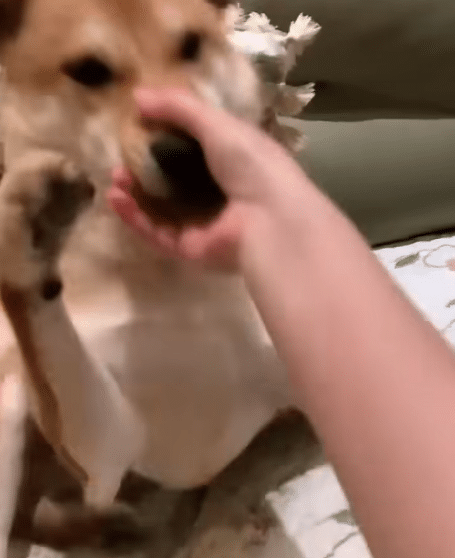
Eventually, the puppy who once resisted close contact reportedly started approaching caregivers for affection.
This does not mean frightened dogs simply need love and everything will immediately improve.
Behavior is more complicated than that.
Some dogs benefit from professional behavior support, particularly when fear is severe or persistent. Medical problems should also be ruled out because pain can strongly influence behavior.
For this puppy, however, removing the physical source of discomfort and providing consistent positive experiences reportedly allowed a friendlier personality to emerge.
Environmental Waste Can Become an Animal-Safety Problem
The fishing net described in this story also raises a broader issue.
Discarded fishing equipment can remain hazardous long after people leave an area.
Fishing line is especially difficult for animals to recognize. Birds, mammals, and aquatic wildlife can become entangled while moving through contaminated environments.
Responsible disposal is therefore an important part of outdoor recreation.
Fishing line, nets, hooks, and similar equipment should be collected and placed in appropriate waste or recycling facilities where available. Damaged equipment should never be left beside rivers, lakes, beaches, trails, or other outdoor areas.
Pet owners can reduce risk by keeping dogs supervised near locations where discarded fishing gear may be present.
A few seconds spent cleaning up equipment can prevent an animal from encountering it later.
How to Help a Frightened Stray Safely
Finding a distressed dog naturally creates an urge to help immediately, but personal safety matters too.
A frightened animal may bite if someone reaches toward it unexpectedly.
When possible, contact local animal control, an established rescue organization, or another qualified professional. Keep the environment calm and prevent crowds from surrounding the animal.
Avoid cornering the dog unnecessarily.
If the animal is trapped, entangled, seriously weak, or near traffic, water, unstable rocks, or another environmental hazard, professional assistance becomes particularly important.
Rescue is most effective when compassion and caution work together.
A New Beginning Takes Shape
The puppy described in the rescue account eventually became more confident and playful.
Instead of spending his time hiding beneath a rock, he could explore safely.
Instead of barking at everyone who approached, he began forming relationships with people.
Regular walks, play, food, rest, veterinary attention, and positive interactions became part of everyday life.
His defensive behavior had once communicated something important: he did not feel safe.
The rescuers listened.
And rather than defining him by his frightened reaction, they addressed the circumstances surrounding it.
Summary
A small puppy was reportedly discovered trapped beneath a large rock formation, covered in mud and barking defensively whenever rescuers approached. Instead of immediately interpreting his behavior as evidence of an aggressive personality, the team remained patient and looked for possible causes.
They eventually discovered old fishing netting tangled around his head. Working slowly, rescuers removed the material and guided the frightened puppy from beneath the rocks before transporting him to safety.
At the rescue center, he received veterinary attention, appropriate nutrition, cleaning, rest, and a predictable environment. Over time, his physical condition reportedly improved alongside his confidence. The puppy who initially barked and resisted contact gradually became more comfortable around familiar caregivers and began seeking affection.
His story offers two valuable reminders. Discarded fishing equipment can pose a significant risk to animals and should always be disposed of responsibly. Equally important, defensive behavior in a frightened or uncomfortable dog deserves context rather than immediate judgment.
Sometimes a bark that sounds threatening is simply an animal’s clearest way of saying, “Please give me space.”
By recognizing that message and responding with patience, experienced rescuers gave this puppy something he could not find beneath those rocks: a safe way forward.