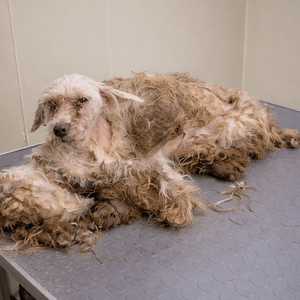
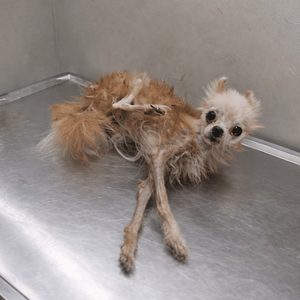
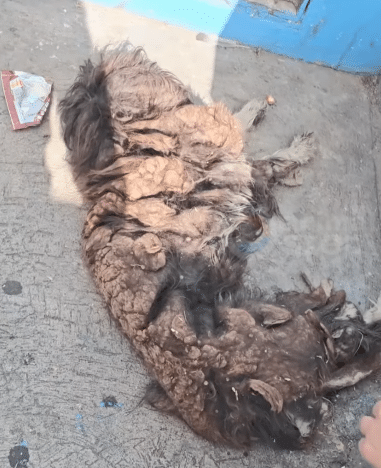
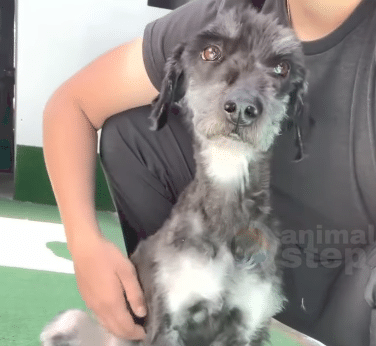
In southern Quito, Ecuador, a small dog had become almost invisible to the world around him. His coat was so overgrown and tangled that his natural shape was difficult to recognize. Dirt clung to the dense mats, his face was partly hidden, and whenever someone approached, he reportedly tried to make himself smaller.
He was believed to be only around three years old, yet his physical condition suggested that he had been without consistent care for a considerable period.
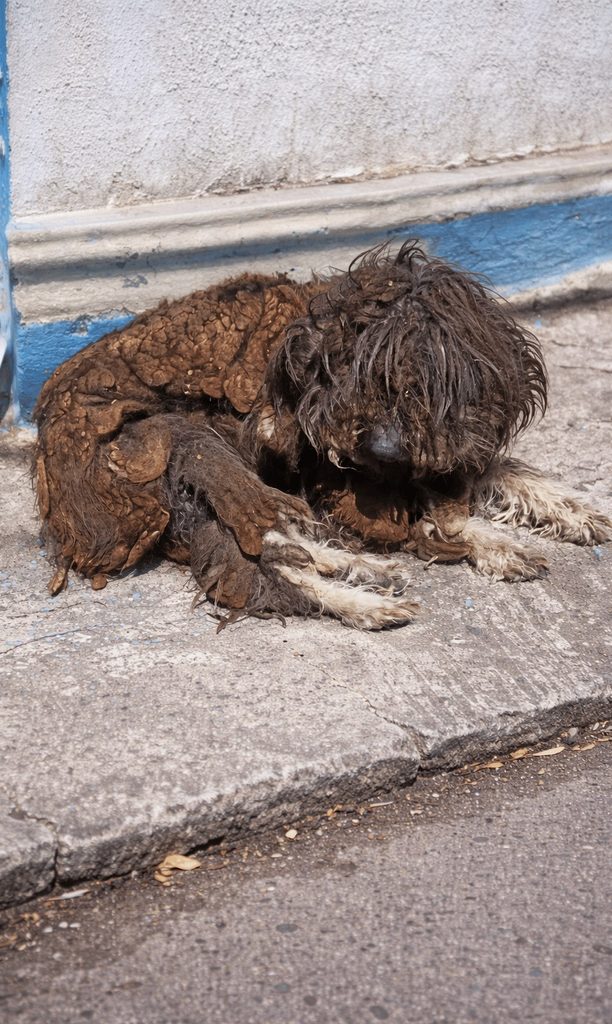
When rescuers finally brought him somewhere safe, they faced two challenges. His body needed attention, but so did his confidence. Removing the matted coat might take hours. Learning that people could be trusted could take much longer.
Video He Looked Like Nothing More Than Forgotten Fur Until Someone Noticed He Was Still There
A Dog Almost Completely Hidden by His Coat
Severe matting is far more than an appearance issue. When loose and growing hair becomes tightly tangled, mats can pull continuously against the skin and make ordinary movement uncomfortable. They can also trap moisture and debris and make it difficult to see what is happening underneath.
That was one of the first problems rescuers needed to address.
The dog’s dense coat covered much of his small frame, making it difficult to properly assess his body condition until the excess hair was removed.
His behavior required equal consideration.
According to the rescue account, he avoided people and seemed uncertain about physical contact. Rather than forcing interaction, the team chose a slower approach.
They gave him space.
They kept their movements calm.
And they allowed him to observe.
Why Severely Matted Fur Requires Careful Attention
It might seem simple to pick up scissors and start cutting, but severely matted fur can sit extremely close to a dog’s skin. Pulling or cutting carelessly may cause unnecessary discomfort or accidental injury.
Professional groomers and veterinary teams can determine the safest way to remove dense mats. Clippers may be more appropriate than scissors in many cases, while dogs with particularly sensitive skin or high stress levels may require additional professional support.
For this dog, rescuers reportedly removed the coat gradually.
As the heavy layers disappeared, a much smaller animal emerged underneath. His natural gray-and-black coloring became visible, and caregivers could finally evaluate him more clearly.
But grooming was only the beginning.
Physical Recovery Needs More Than a Haircut
Once the tangled coat was gone, the dog’s thin body became easier to see.
According to his story, he was underweight and physically weak. Eating also appeared difficult at first, although the source does not establish a specific medical reason for this.
That distinction matters.
Loss of appetite or difficulty eating can have many possible causes, including dental problems, gastrointestinal illness, stress, pain, infection, or other medical conditions. A veterinarian should determine the cause rather than relying on appearance or assumptions about the dog’s past.
A complete veterinary evaluation can also assess hydration, skin condition, teeth, ears, eyes, joints, parasites, and overall body condition.
For an underweight animal, nutrition should be approached thoughtfully as well.
Simply providing unlimited food is not always the safest recovery strategy. A veterinarian can recommend suitable portions, meal frequency, and an appropriate diet based on the individual dog’s condition.
The Value of a Quiet Recovery Environment
Medical treatment supports the body, but environment can strongly influence how a nervous rescue dog adjusts.
Imagine entering an unfamiliar place where every sound, person, and object is new. Now imagine that you cannot understand anyone explaining that you are safe.
That is essentially the situation many rescue dogs face.
A quiet resting area can reduce unnecessary stimulation. Predictable meal times create routine. Comfortable bedding provides a consistent place to retreat, while calm handling helps the dog understand what to expect.
This dog’s caregivers reportedly avoided placing pressure on him to become affectionate.
That was important.
Fearful dogs do not need to perform gratitude for the people helping them. They need opportunities to discover safety for themselves.
Trust Begins With a Small Moment
One of the most meaningful developments in the dog’s recovery was remarkably simple.
He allowed someone to touch him without immediately moving away.
There was no spectacular event.
No instant personality change.
Just acceptance.
For an animal that had repeatedly avoided human contact, however, that small moment represented progress.
Trust develops through repetition. A hand approaches gently and nothing frightening happens. Food arrives consistently. A person sits nearby without forcing contact. The dog sleeps and wakes to discover that his surroundings remain safe.
Each experience becomes another piece of evidence.
Eventually, the animal may decide to move closer voluntarily.
Positive reinforcement can support this process. Treats, praise, toys, or other things the dog enjoys can help create pleasant associations, provided interactions remain appropriate and the animal is comfortable.
His Personality Starts to Appear
As the days passed, rescuers reportedly noticed increasingly encouraging behavior.
The little dog became stronger.
His movements appeared easier without the heavy coat.
He started staying closer to familiar people instead of automatically backing away.
Eventually, his tail began wagging when people he recognized approached.
These behavioral changes can be just as meaningful as physical improvement.
Weight gain is measurable.
A healthier coat is visible.
Laboratory results provide medical information.
But confidence reveals itself differently.
It appears when a dog chooses to investigate a room.
It appears when he relaxes enough to sleep deeply.
It appears when he approaches someone because he wants attention rather than because he has nowhere else to go.
The dog who once tried to disappear was beginning to participate in his surroundings.
Learning to Enjoy Human Affection
According to his rescue story, physical affection gradually became something he could enjoy.
Instead of retreating from gentle touch, he began leaning toward caregivers.
That change should never be taken for granted.
Not every rescue dog becomes highly affectionate, nor should affection be treated as the only sign of successful rehabilitation. Individual dogs have different personalities and preferences, just as animals with unknown histories may require different amounts of time to adjust.
The goal should not be to transform every dog into an enthusiastic cuddler.
The goal is to help the animal feel secure enough to make choices.
For this dog, one of those choices eventually became seeking closeness.
Preparing a Rescue Dog for Adoption
As his health and confidence improved, the possibility of adoption became more realistic.
A responsible adoption involves much more than falling in love with a transformation photograph.
Potential adopters should understand the dog’s medical history, grooming requirements, temperament, activity level, and any continuing behavioral needs. They also need to consider whether their home environment matches what the animal needs.
A dog with a coat prone to matting will require regular grooming for life.
Routine brushing, bathing when appropriate, professional trimming, nail care, ear checks, dental care, and skin monitoring should become part of responsible ownership.
Preventive veterinary care is equally important. Vaccinations, parasite prevention, identification, microchipping, appropriate nutrition, and regular examinations help protect the dog’s future.
For a previously fearful animal, adopters should also expect an adjustment period.
Moving into a permanent home means another change in environment, even when that change is positive.
The Importance of Decompression
A newly adopted rescue dog may not reveal his complete personality immediately.
Some dogs explore within hours. Others prefer several quiet days before becoming comfortable. Particularly cautious animals may require considerably longer.
Keeping the early routine simple can help.
Provide a comfortable sleeping area, regular meals, predictable bathroom breaks, and calm interaction. Avoid overwhelming the dog with visitors, crowded outings, or constant physical attention.
Allow curiosity to lead the process.
When the dog approaches, respond positively.
When he needs space, respect it.
Building confidence is not a race.
The relationship that develops gradually can become incredibly strong precisely because it is based on repeated experiences of safety.
A Transformation Bigger Than Appearance
The visual difference in this dog’s story is certainly striking.
At first, tangled fur obscured his face and body. After grooming and care, a small gray-and-black dog emerged.
But focusing only on his appearance misses the most important transformation.
The real change happened when he stopped trying to disappear.
He began watching people with curiosity instead of immediately withdrawing. He accepted gentle contact. Then he reportedly started seeking it. His body became stronger while his world became less frightening.
That is what thoughtful rehabilitation can accomplish.
It does not erase an animal’s past.
It gives the animal enough positive experiences that the past no longer controls every interaction.
Ready for a Different Future
According to the rescue account, the dog eventually reached the point where caregivers believed he was ready for a permanent home.
That milestone represents more than completing veterinary treatment or grooming.
He had learned skills that would help him navigate family life.
He could interact with familiar people.
He could receive care.
He could explore without immediately retreating.
Most importantly, he had begun making connections.
The frightened animal who once blended into the streets of southern Quito was finally becoming visible, not because his appearance demanded attention, but because his personality had room to emerge.
Summary
A small dog reportedly found in southern Quito arrived in rescue with an extremely overgrown and heavily matted coat that concealed much of his body. He was underweight, physically weak, and deeply cautious around people.
His caregivers understood that rehabilitation would require more than grooming. They gradually removed the restrictive coat, cleaned him carefully, addressed his physical needs, and gave him a quiet environment where he could recover without pressure.
As his body became stronger, his behavior began changing too. One of the earliest breakthroughs came when he allowed gentle human contact without retreating. Over time, those small experiences accumulated. He moved closer to familiar caregivers, wagged his tail, and reportedly began enjoying affection.
His journey highlights several important lessons for responsible pet care. Severe matting can affect comfort and requires safe, regular grooming. Underweight or medically vulnerable dogs benefit from veterinary assessment and carefully planned nutrition. Fearful animals often need predictable routines, positive reinforcement, quiet surroundings, and time rather than forced interaction.
Eventually, the little dog became ready to move toward adoption.
His transformation was not simply about discovering what he looked like beneath the tangled coat. It was about creating an environment where he no longer felt the need to hide.
Sometimes a second chance begins with rescue. But the deeper transformation happens afterward, through ordinary days filled with consistent food, professional care, gentle hands, and enough patience for trust to grow on its own.