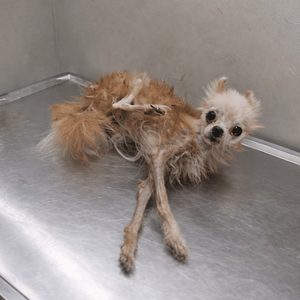
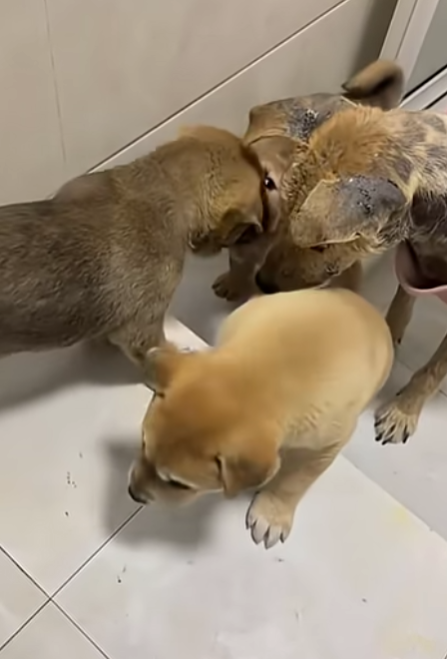
Beside a trash bin on a busy street, a mother dog was doing the only thing that seemed to matter to her: staying close to her three puppies.
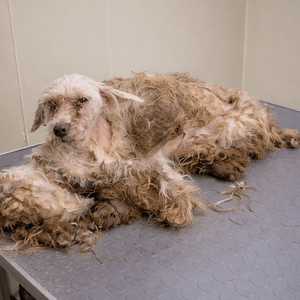
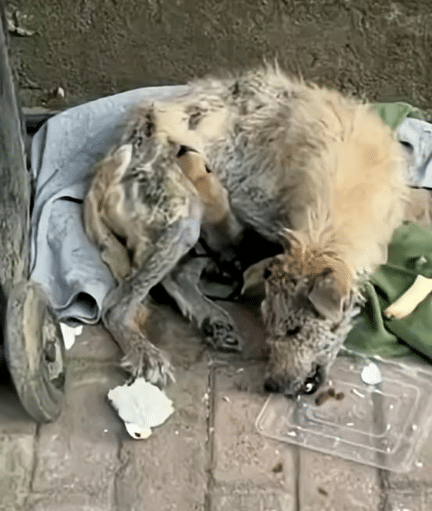
She appeared extremely thin and exhausted. Much of her coat was missing, and her irritated skin suggested that she urgently needed professional care. Yet even in her weakened condition, she reportedly continued nursing her puppies and keeping them close.
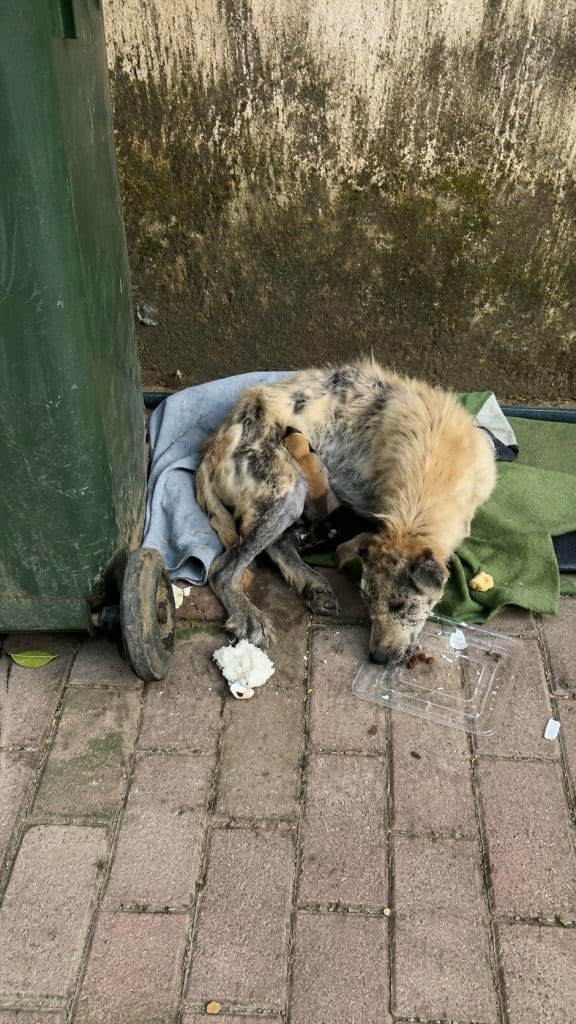
People passing through the area began noticing the little family. Some left food and fresh water nearby, offering temporary relief while hoping that more comprehensive help would arrive.
Eventually, it did.
Video She Was Covered in Mange and Starving Beside a Trash Can But She Never Stopped Feeding Her Puppies
A Mother Dog Trying to Care for Three Puppies
Caring for newborn or very young puppies places substantial nutritional demands on a mother dog. She needs enough energy and nutrients not only for herself but also to produce milk for her growing litter.
For a stray mother already struggling to find regular meals, that challenge can become especially difficult.
The dog’s thin appearance therefore concerned the people who found her. Her skin and coat also showed obvious signs that warranted veterinary attention.
Although skin problems are often visible, their underlying causes are not always obvious. Parasites, infections, allergies, nutritional deficiencies, immune-related conditions, and other medical issues can produce similar symptoms.
Guessing from appearance alone can lead to inappropriate treatment.
What this mother needed was a veterinarian.
Strangers Provide Food While Help Is Arranged
Before rescuers arrived, compassionate people reportedly placed small amounts of food and water near the family.
That simple action helped without unnecessarily separating the puppies from their mother.
When assisting an unfamiliar stray dog with puppies, caution matters. Mother dogs may become protective if they believe their babies are threatened. Approaching calmly and contacting an established rescue organization or local animal service is generally safer than attempting a complicated rescue without experience.
It is also important not to remove healthy nursing puppies from their mother unnecessarily.
When possible and medically appropriate, keeping a mother and her young litter together provides the puppies with nutrition, warmth, social contact, and maternal care.
In this case, rescuers eventually arrived prepared to move the entire family.
The Family Leaves the Street Together
The mother dog was reportedly too weak to offer much resistance when the rescue team approached.
Caregivers handled her gently and wrapped her for warmth and security. Her puppies remained close during transportation so the family could continue benefiting from familiar contact.
For the first time, the mother no longer needed to divide her attention between protecting her puppies and surviving an unpredictable street environment.
There would be regular food.
Clean water.
A protected sleeping area.
Professional medical attention.
Those things may sound basic, but basic needs form the foundation of successful animal rehabilitation.
Veterinary Care Begins
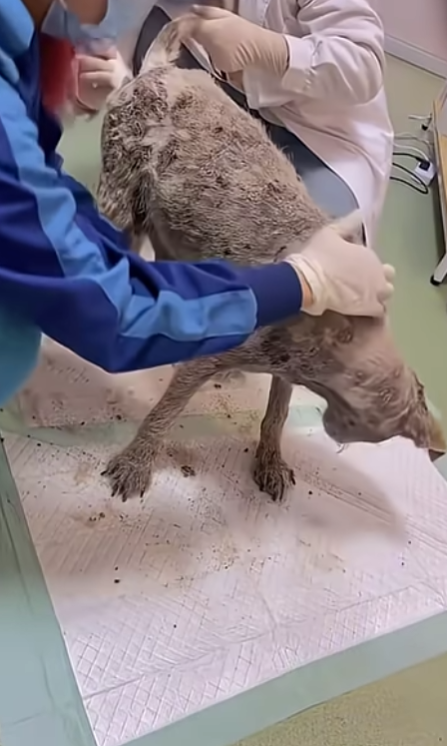
Once the family reached professional care, the mother dog received a veterinary examination.
Her skin condition required treatment, but responsible care begins by understanding the underlying problem rather than simply improving appearance.
Veterinarians can use physical examinations and, when appropriate, skin tests or other diagnostics to investigate problems such as parasites, bacterial or fungal infections, allergies, and additional medical conditions.
According to the rescue account, the mother received medication and other veterinary treatment for her skin problems. Areas of her coat were also managed so caregivers could keep affected skin clean and monitor recovery.
Her body condition required attention as well.
For an underweight nursing dog, nutrition becomes a central part of rehabilitation.
Rebuilding Strength Through Nutrition
It is tempting to think that a very thin dog simply needs as much food as possible.
In reality, nutritional recovery should be appropriate to the animal’s condition and guided by veterinary professionals when significant undernutrition is present.
A nursing mother has especially high energy requirements.
Balanced food provides protein, fats, carbohydrates, vitamins, minerals, and other nutrients needed to maintain her body while supporting milk production.
Fresh water is equally important because nursing increases fluid requirements.
Caregivers can monitor appetite, body weight, stool quality, hydration, activity, and milk production as part of the broader recovery picture.
For this mother dog, dependable meals also removed a daily burden.
She no longer had to leave her puppies behind while searching the streets for something to eat.
The Puppies Finally Have a Safe Place to Grow
While their mother received treatment, her three puppies reportedly remained warm, clean, and protected.
Young puppies have different needs from adult dogs.
Depending on their age, they may rely heavily on their mother for nutrition and warmth. They also require veterinary guidance regarding parasite control, vaccinations, weaning, and developmental care.
A clean environment can help reduce unnecessary health risks, while comfortable bedding gives the family somewhere secure to rest.
The puppies could now spend their energy doing what young dogs are supposed to do: eating, sleeping, growing, and gradually discovering their surroundings.
Their mother could rest too.
That change alone represented enormous progress.
Skin Recovery Takes Time
Skin and coat improvement rarely happens overnight.
Even after the underlying problem is being appropriately treated, fur may require weeks or months to return fully. Nutrition, general health, environmental conditions, and the original cause all influence recovery.
According to the family’s story, the mother gradually became stronger while her skin improved and her coat began returning.
Her caregivers reportedly used clothing at times to help keep her comfortable and protected.
Any clothing used for a recovering dog should fit properly, remain clean and dry, and avoid rubbing irritated areas. Veterinary guidance is particularly useful when skin conditions are still healing.
The goal should always be comfort rather than appearance.
As the mother’s condition improved, her behavior reportedly changed as well.
She became more relaxed and increasingly comfortable moving outdoors.
Recovery Starts Showing in Everyday Behavior
A healthier coat can provide visible evidence of progress, but some of the most meaningful changes appear in behavior.
A recovering dog may begin sleeping more peacefully.
Appetite becomes consistent.
Curiosity returns.
The dog voluntarily approaches caregivers.
Walks become interesting rather than exhausting.
These ordinary behaviors can reveal how much has changed.
The mother dog who had once spent her days beside a trash bin caring for puppies reportedly began enjoying calm outdoor walks and regular interaction with the people helping her.
She no longer needed to conserve every bit of energy for immediate survival.
There was finally room in her day for something else.
Comfort.
The Puppies Discover Play
Meanwhile, the puppies were changing rapidly.
As they grew stronger, their world expanded beyond sleeping and nursing.
They reportedly began running around, playing, and interacting enthusiastically with people.
Play is an important part of puppy development.
Through appropriate play, young dogs practice movement, communication, problem-solving, and social behavior. Toys can provide enrichment, while positive experiences with people can help puppies develop confidence.
Socialization should still happen carefully.
Young puppies benefit from controlled, positive exposure to appropriate people, sounds, surfaces, environments, and healthy animals while following veterinary recommendations about vaccination and disease risk.
The objective is not to expose them to everything at once.
It is to make new experiences safe and positive.
Supporting a Mother After Her Puppies Grow
As puppies mature and begin transitioning toward appropriate solid food, their mother’s nutritional and physical needs also change.
Weaning should happen gradually rather than through an abrupt separation whenever circumstances allow.
Veterinary professionals can advise caregivers about feeding schedules and the mother’s changing calorie requirements.
Spaying and neutering may also become part of the family’s long-term veterinary plan when medically appropriate.
Preventive healthcare matters for the puppies too.
Vaccination schedules, parasite prevention, identification, microchipping, and routine examinations create a stronger foundation for adulthood.
Rescue is most successful when it looks beyond the immediate emergency and prepares each animal for long-term health.
Responsible Adoption Completes the Journey
Once a rescued mother and her puppies become medically and developmentally ready, finding appropriate homes becomes the next challenge.
Cute puppies naturally attract attention, but adoption is a long-term responsibility.
A family must be prepared for food, veterinary expenses, training, exercise, grooming, preventive healthcare, identification, and years of companionship.
The mother deserves equally thoughtful consideration.
Adult rescue dogs are sometimes overlooked when puppies are available, yet they can become wonderful companions when matched with suitable households.
Every member of this family needed more than temporary sympathy.
They needed lasting responsibility.
Why Keeping the Family Together Mattered
One of the most meaningful decisions in this rescue was moving the mother and puppies together.
The mother had already been caring for them under difficult circumstances. Once professional help became available, rescuers could support that relationship instead of unnecessarily replacing it.
The puppies received maternal contact while caregivers provided the mother with resources she had previously lacked.
Food supported her.
Veterinary treatment addressed her health.
Shelter protected the entire family.
In other words, rescuers did not ask the mother to stop caring for her puppies.
They finally gave her the support to do it safely.
A Different Kind of Transformation
Before rescue, the family’s days reportedly centered on finding enough food, staying together, and coping with an unpredictable street environment.
Afterward, daily life looked very different.
Meals arrived consistently.
The mother received veterinary treatment.
The puppies grew.
Play replaced uncertainty.
Rest became possible.
The most important transformation was not simply that the mother’s fur returned or that the puppies became bigger.
Their environment changed.
Safety gave their bodies an opportunity to recover and their personalities an opportunity to emerge.
Summary
A severely underweight mother dog was reportedly discovered beside a trash bin with three young puppies. Despite her weakened condition and significant skin problems, she continued caring for her litter while compassionate strangers provided temporary food and water.
A rescue team eventually moved the entire family to safety, keeping the puppies close to their mother during the transition.
Veterinary professionals evaluated the mother’s health and began appropriate treatment for her skin condition while caregivers provided carefully managed nutrition, clean surroundings, rest, and consistent access to fresh water. Her puppies received warmth, protection, nutrition, and age-appropriate care as they continued developing.
Over time, the mother’s strength reportedly returned, her skin improved, and her coat began growing back. Her puppies also became increasingly active, progressing from vulnerable babies into playful young dogs.
Their journey demonstrates that responsible rescue involves much more than removing animals from the street. Veterinary diagnosis, balanced nutrition, hygiene, parasite prevention, vaccinations, socialization, appropriate weaning, and responsible adoption all contribute to lasting success.
Most importantly, this mother did not have to carry the responsibility of protecting her puppies alone anymore.
Once people provided the resources she lacked, the entire family finally had something that life beside a busy street could never reliably offer: the opportunity to grow, recover, and enjoy each day in safety.