It started with an accident that could easily have gone unnoticed.
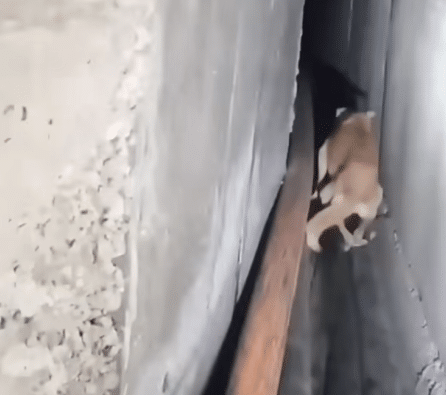
A small brown-and-white dog had fallen into a deep drainage channel beneath the surface. The narrow trench was lined with large curved pipes, leaving very little room for the frightened animal to move.
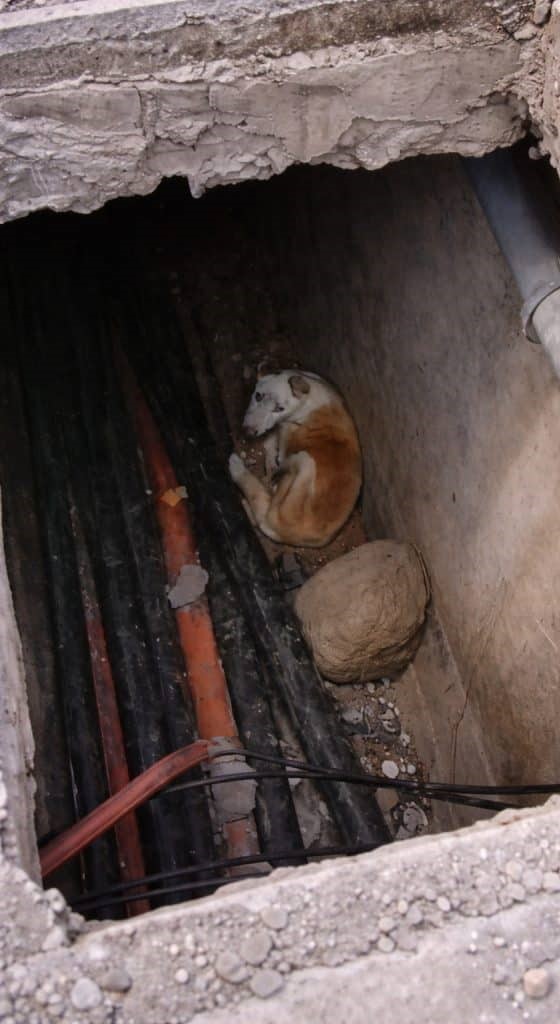
Down below, daylight was limited.
The dog carefully balanced on the pipes, searching for somewhere he could climb toward the surface. But every direction seemed to lead to another confined section of the channel.
Video Trapped in a Deep Drain, This Dog’s Rescue Required Patience, Precision, and Trust
He could move, but he could not escape.
Fortunately, someone noticed his situation and called for assistance.
What followed was not a dramatic race against time. Instead, it became an example of something equally important in animal rescue: patience, planning, teamwork, and knowing when moving slowly is safer than rushing.
A Difficult Place for a Small Dog
Drainage channels and utility trenches can become unexpected hazards for roaming animals.
From ground level, an opening may appear small. Once an animal falls inside, however, the depth and shape of the structure can make climbing back out extremely difficult.
That was the challenge facing this dog.
Large pipes occupied much of the available space. Their rounded surfaces provided little traction, and the narrow walls limited his ability to turn around comfortably.
He tried to navigate the area anyway.
Instinct told him to keep searching.
He moved from one section to another, placing his paws carefully while attempting to find a route upward.
But there was no accessible exit.
The longer he remained below ground, the more important outside assistance became.
Help Arrives at the Drain
After receiving information about the trapped dog, a rescue team from the Animal Warriors Conservation Society arrived at the location.
Before attempting to reach him, they assessed the trench.
That first step mattered.
A confined rescue area presents challenges that may not be obvious from above. The available space, depth, obstacles, possible escape routes, and the animal’s behavior can all affect how rescuers should proceed.
Simply reaching down toward a frightened dog might cause him to retreat deeper into the channel.
Entering the trench without a plan could create additional complications.
The team therefore avoided unnecessary movement.
Instead, they studied the dog’s position and developed a controlled approach.
Patience Became Part of the Rescue Plan
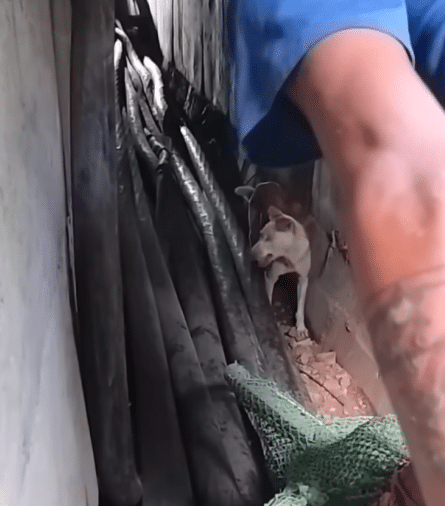
One rescuer positioned himself near the far end of the channel with a specialized net.
The idea was straightforward.
Rather than pursuing the dog through the narrow space, the rescuer would wait for him to approach naturally.
This reduced the need for chasing and gave the team greater control over the situation.
Above ground, other members prepared to assist once the dog was secured.
Then everyone waited.
Waiting can feel uncomfortable during an animal rescue. When you see an animal in a difficult position, your first instinct may be to act immediately.
But speed is not always the same as effectiveness.
Imagine trying to catch a frightened bird inside a room. Running toward it usually makes the animal move faster and become more stressed. Creating a controlled environment and waiting for the right opportunity can often work better.
The same principle helped guide this rescue.
The Dog Slowly Approaches
Inside the trench, the dog continued moving along the pipes.
He did not understand the plan unfolding around him.
All he knew was that he wanted to find a way out.
Step by step, he moved closer to the rescuer waiting at the end.
The team avoided sudden movements that might frighten him.
The distance gradually became smaller.
Then the opportunity arrived.
The rescuer carefully positioned the net around the dog.
There was no need for a prolonged chase.
The animal was finally secure.
For the first time since becoming trapped, he no longer had to find his own way through the confusing underground space.
Now the rescuers could do that for him.
Lifting Him Through a Narrow Opening
Securing the dog solved only half the problem.
The team still needed to bring him to the surface.
The opening above was narrow, so the lifting process required coordination. Moving too quickly could cause the net to shift or make the dog uncomfortable.
The rescuers communicated with one another and gradually raised him.
A little higher.
Then higher again.
The pipes and dark walls slowly disappeared beneath him.
Finally, the dog passed through the opening.
He was back above ground.
After navigating a confined trench with no obvious exit, something as ordinary as open space suddenly represented freedom.
The Dog’s Behavior Changed Almost Immediately
Once safely away from the opening, rescuers released the dog from the net.
For a brief moment, he paused.
Then his body language changed.
His tail began moving.
Soon he was walking around freely, investigating the surroundings and putting distance between himself and the drain.
That reaction offered an encouraging sign.
The dog who had been carefully balancing underground could now move normally across stable ground again.
The rescue had succeeded without requiring a frantic pursuit or unnecessarily stressful handling.
Instead, patience had done much of the work.
Why Frightened Animals May Move Away From Rescuers
People sometimes wonder why an animal in trouble does not immediately approach someone trying to help.
The answer is simple: the animal may not understand that help is being offered.
A frightened dog sees unfamiliar people, equipment, movement, and noise. Even when rescuers have good intentions, those unfamiliar elements can feel threatening.
Instinct may tell the animal to retreat.
This is why animal rescue often involves understanding behavior as much as physical strength.
A calm voice, slower movements, controlled positioning, food when appropriate, and reducing unnecessary pressure can sometimes make an enormous difference.
Each situation is different, of course.
Some animals approach immediately.
Others need time.
Experienced rescuers adjust their methods according to the environment and the animal’s behavior rather than expecting every rescue to unfold the same way.
Why Drainage Areas Can Be Dangerous for Animals
The incident also highlights a common environmental hazard.
Open drainage channels, construction trenches, utility spaces, wells, and similar structures may be difficult for animals to recognize, particularly at night or when vegetation partially covers an opening.
A dog exploring unfamiliar territory can step too close and unexpectedly lose footing.
Once below ground, escaping may be much harder than entering.
Smooth walls provide little traction.
Pipes create obstacles.
Narrow spaces limit movement.
In some drainage systems, changing weather can introduce another concern because rainfall may cause water levels to rise.
When people discover an animal trapped in such a location, contacting an experienced rescue organization or appropriate local service is often safer than entering a confined space without proper equipment.
The rescuer needs to remain safe too.
Teamwork Made the Difference
Although one rescuer ultimately secured the dog with the net, the successful outcome depended on cooperation.
Someone first noticed the problem.
Someone contacted assistance.
The rescue team assessed the environment.
One person positioned himself strategically inside or near the channel while others prepared above.
Then they coordinated the lift.
Animal rescue often works this way.
The person performing the most visible action may receive attention, but several quieter decisions usually make that action possible.
Communication matters.
Equipment matters.
Planning matters.
And perhaps most importantly, everyone needs to work toward the same goal without creating unnecessary confusion for the animal.
A Rescue Does Not Need to Be Dramatic to Matter
There were no helicopters or complicated machines involved in this rescue.
The solution came from relatively simple equipment and careful positioning.
Yet simplicity should not be confused with insignificance.
For the dog trapped below ground, the result meant everything.
A successful rescue is not measured by how spectacular it looks.
It is measured by whether the animal reaches safety while unnecessary risks are minimized.
Sometimes the best rescue is the quietest one.
Observe.
Plan.
Position the right equipment.
Wait.
Act when the opportunity appears.
That approach transformed an apparently difficult situation into a controlled operation.
What to Do If You Find a Trapped Animal
Discovering an animal inside a deep drain or confined structure can make anyone want to help immediately.
Before acting, however, consider the environment.
Entering an unstable trench, drainage system, utility area, or confined underground space can expose a person to hazards they cannot see from the surface.
Instead, contact an appropriate animal rescue organization, emergency service, or local authority when professional assistance is available.
While waiting, maintaining visual contact from a safe location can be helpful.
Avoid creating excessive noise or surrounding the animal with a crowd if doing so appears to increase its stress.
The most useful action may simply be ensuring trained rescuers can locate the animal quickly when they arrive.
Compassion works best when paired with good judgment.
Back in the Open Air
Perhaps the most memorable part of the rescue came after everything difficult was already over.
The dog stood above ground again.
There were no narrow walls around him.
No slippery pipes beneath his paws.
No need to search endlessly for an exit.
He could simply walk.
The sight of his tail beginning to move captured the difference between the two worlds perfectly.
Minutes earlier, every step required calculation.
Now every step could take him wherever he wanted to go.
It was a simple kind of freedom, but sometimes the simplest things matter most.
Summary
A small brown-and-white dog became trapped inside a deep, narrow drainage channel lined with large pipes. Although he could move carefully through the confined area, the structure offered no accessible route back to the surface.
After the situation was reported, rescuers assessed the trench and chose a patient approach rather than pursuing the frightened dog. One rescuer positioned himself strategically with a specialized net while the rest of the team prepared to help from above.
As the dog gradually approached, the rescuer secured him calmly. Team members then coordinated a careful lift through the narrow opening until the animal reached solid ground.
Once released, the dog quickly began moving freely again, providing an encouraging conclusion to a rescue built on patience rather than force.
The incident also offers a valuable reminder about animal safety. Deep drains and confined spaces can be hazardous, and untrained people should avoid placing themselves at risk when attempting a rescue.
Sometimes helping effectively does not mean acting faster.
It means observing carefully, choosing the safest approach, and waiting for exactly the right moment to bring an animal back into the light.